by Chris Good -- staff editor at TheAtlantic.com
Irked by the suggestion of climate change doubters that the East Coast snowstorm is proof that global warming doesn't exist, the liberal Center for American Progress pulled together a conference call today to tell reporters not only that that's not the case, but, basically, to stop being a mouthpiece for people who doubt the science.
Jeff Masters, director of meteorology at Weather Underground, got on the call to remind everyone that snowfall does not equal a drop in temperature--that as long as it's cold enough for snow, precipitation means a snowstorm.
More precipitation--including heavy snowstorms--is a sign of global warming, he said, as atmospheric moisture levels have increased with warmer temperatures, meaning more storms with heavy snow or rain.
"We still will have snowstorms, and the signs of record snowstorms being evidence against global warming is just not true," Masters said. "In the future we shouldn't be surprised to find heavier precipitation events."
Center for American Progress climate change fellow Joseph Romm criticized John M. Broder's New York Times story, in which Romm was quoted, which noted the uptick of global warming debate during the snowstorm. A chorus of Republicans have mocked Al Gore since the snowstorm hit. The family of Sen. James Inhofe (R-OK), the leading climate change skeptic in the nation (and, by extension, perhaps the world) built an igloo on Capitol Hill bearing a sign that read "Al Gore's New Home." This is not new; cold weather often sparks criticisms of climate change, and of Gore.
"We're not in a deep freeze," Romm said of the NY Times headline, "Climate-Change Debate Is Heating Up in Deep Freeze."
"This actualy is, according to the satellite record, it's the warmest winter on record," Romm said. "The scientific literature predicts that you will see more intense winter storms because of global warming."
Romm pointed to warm temperatures (in the upper 40s) and likely rain during the Winter Olympics in Vancouver.
"I realize that this can be a complicated matter to report," Romm said. "The challenge for the media is gonna be how do you report about this statistical increase in extreme weather and not let those who don't understand the science obfuscate it."
Friday, May 7, 2010

Monday, May 3, 2010
Soccer Fever

The soccer Fever is coming world cup 2010. Huge Event with lots of celebrations and will give us a new world champion. It will take place in picturesque country of South Africa and the first game for the Soccer World Cup in South Africa will be played on 11 June 2010. The games will be played at Cape Town, Rustenburg, Johannesburg, Durban, Bloemfontein, Pretoria, Port Elizabeth, Polokwane and Nelspruit.

World cup the biggest event of soccer. World cup the only biggest event of soccer which gathers country teams. Beside world cup soccer is played all over the world in club form. Club players are selected from all over the world in the basis of their performance. Despite the region, age groups and gender, this game has its fans everywhere. People not only love to play soccer, but also watching the soccer match has become one of the major excitements among the soccer lovers. This craze of soccer can be seen everywhere, whether it’s in schools, colleges, in a local soccer club or national and international tournaments. Taking advantage of this growing soccer lovers’ community, different companies have started offering various soccer attractions to them. This includes a variety of soccer equipments like soccer balls, colorfully and sophisticatedly designed, soccer uniform consisting of soccer shirts, soccer shorts, soccer jerseys, socks, caps and different bed sheets and curtains with soccer related prints and the list goes on and on.


These days club’s game is prepared like a war in the battle field. Some times there comes out a real fight in between fans of 2 clubs. Soccer uniform has become an inseparable part of this magnificent game. Initially soccer uniforms were worn only by soccer players. But with the passage of time as the admirers of soccer increased, the companies started designing uniforms for soccer fans as well. Now it has become a full time business. Many colorful, bright and trendy soccer shirts, soccer jerseys , shorts are designed for the fans who happily wear these uniforms to support their teams and proclaim their loyalty and admiration. Also the soccer players in the field get encouraged when they see their cheering supporters, shouting for them in their colorful uniforms. The soccer uniforms for fans are manufactured in different colors, with various designs, logos, and numbers or soccer players’ pictures imprinted on them. The companies also offer customization facilities to their customers by which the soccer lovers can get their uniforms personalized according to their choice.


Selectio of player on the club is very important part. It involves the sponsors of the team. So that they can offer more money to the player to attract him in the team. The first step in creating a soccer club is deciding the level of skill or competence you want your club to achieve. With this you will be able to determine the members you wish to get. Soccer club team formation is based on following· The ability of your players.
· Your players speed and endurance.
· The number of substitutes you have.
· The length of the field.
· The other team's strengths and weaknesses.
webmaster socceruniform
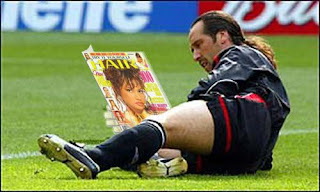
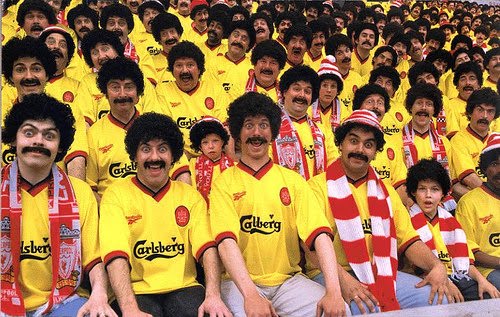
World Cup Football Fun PT 1
Every tournament has its fair share of magical moments. We've gone through dozens of search engines to find the best images we can to represent the real ethos of the soccer world cup. More to come so stay tuned...





Sunday, May 2, 2010
100 World Cup Football Facts

100 facts about the World Cup, each fact related to a specific number, one through 100.
1 — every match at the inaugural 1930 World Cup in Uruguay was played in one city: Montevideo.
2 — Sweden's Jan Olsson, wearing No. 2, was the defender that Dutch star Johan Cruyff famously bamboozled with his inventive "Cruyff Turn" at the 1974 World Cup in West Germany.
3 — Brazil's Pele is the only player to win three World Cups: in 1958, 1962 and 1970.
4 — the number of players who recorded two hat tricks at the World Cup: Hungary's Sandor Kocsis (both in 1954), France's Just Fontaine (1958), West Germany's Gerd Muller (1970) and Gabriel Batistuta (one in 1994 and one in 1998).
5 — Russia's Oleg Salenko scored a tournament-record five goals in one game during a 6-1 win over Cameroon at the 1994 World Cup in the United States.
6 — Paolo Rossi was the top scorer at the 1982 World Cup in Spain with six goals, leading Italy to its third title.
7 — the number of days the World Cup trophy went missing when it was stolen prior to the 1966 Cup in England. A dog named Pickles, being taken out for a walk by his owner in South London, discovered the trophy wrapped in some newspapers at the bottom of some bushes a week after it was taken.
8 — Scotland has qualified for the World Cup on eight occasions. All eight times it failed to advance beyond the first round.
9 — Mexico lost a record nine straight games at the World Cup (1930, 1950-58).
10 — the number of minutes left in extra time of the 2006 World Cup final when France's Zinedine Zidane head-butted Italian defender Marco Materazzi.
11 — Turkey's Hakan Sukur scored 11 seconds into the game against South Korea in 2002, the quickest goal in World Cup history.
12 — Austria and Switzerland teamed up for the highest-scoring game in World Cup history in 1954 when they combined for 12 goals. Austria won 7-5.
13 — the number of teams that participated in the first World Cup in 1930 in Uruguay.
14 — German star Gerd Muller, regarded as one of the top strikers in the history of soccer, scored 14 career goals at the World Cup.
15 — the number of goals Brazil's Ronaldo scored at three World Cups (1998, 2002 and 2006), a tournament record.
16 — Russian referee Valentin Ivanov brandished 16 yellow cards (tying a tournament record) in a second-round match at the 2006 World Cup in Germany between Portugal and the Netherlands.
17 — the age of Brazil's Pele when he became the youngest player ever to score at the World Cup, in 1958 in Sweden.
18 — England's Geoff Hurst is the only player in World Cup history to net a hat trick in the final, the first of his three goals against West Germany in 1966 coming in the 18th minute.
19 — Lucien Laurent scored for France in the 19th minute against Mexico in 1930, becoming the first player to score a goal at the World Cup.
20 — the 20th World Cup will be staged in 2014 in Brazil.
21 — the four European teams that competed at the first World Cup (Romania, Belgium, France and Yugoslavia) set sail for Uruguay on June 21, 1930.
22 — North Korea took a shocking 3-0 lead after only 22 minutes against Portugal in the quarter-finals of the 1966 World Cup, only to see the Portuguese storm back to win the game 5-3.
23 — Uruguay's Alcides Ghiggia was 23 when he scored the winning goal against Brazil in the 1950 World Cup decider at Rio's Maracana Stadium. Years later, Ghiggia famously said: "Only three people have ever silenced 200,000 people at the Maracana with a single gesture: Frank Sinatra, Pope John Paul II and me."
24 — the number of consecutive passes made by Argentina before midfielder Esteban Cambiasso scored against Serbia and Montenegro during the first round of the 2006 World Cup.
25 — Germany’s Lothar Matthaus has played in a tournament record 25 games at the World Cup.
26 — on May 26, 1928, at its Amsterdam conference, FIFA, soccer’s world governing body, announced plans to stage a World Cup tournament independent of the Olympics. Two years later, the first World Cup was held in Uruguay.
27 — Hungary scored the most goals by one team at a single tournament, finding the back of the net
27 times in 1954 in Switzerland.
28 — Hungary entered the 1954 World Cup as the favourites, having gone undefeated in their previous 28 games (24 wins, four draws) in international play, before losing to West Germany in the final.
29 — 1929 was the year in which FIFA awarded Uruguay the right to host the first World Cup.
30 — the number of referees who will work the 2010 World Cup in South Africa. They'll come from 28 countries.
31 — Australia defeated American Samoa 31-0 in 2001, the largest margin of victory ever in a World Cup qualifying game.
32 — the number of teams the tournament expanded to (from 24) in 1998 in France.
33 — Ireland asked FIFA to let it enter the 2010 World Cup as the tournament's 33rd team after Thierry Henry's infamous handball helped France qualify for the competition at the expense of the Irish. Their request was denied.
34 — born in Buenos Aires, Luis Monti is the only person to have played in two World Cup finals for different countries, representing Italy in 1934 after playing for Argentina four years earlier.
35 — the height (in centimetres) of the World Cup trophy presented to Uruguay after it defeated Argentina in the final of the first World Cup, in 1930.
36 — Polish legend Zbigniew Boniek was the 36th player in World Cup history to record a hat trick, scoring three past Belgium in 1982. Regarded as one of the best players of his era, Boniek was suspended for the semifinals that year against Italy, which easily won 2-0.
37 — the minute in which Guillermo Stabile scored to give Argentina a 2-1 lead in the 1930 World Cup final. Uruguay came from behind to win 4-2.
38 — Joe Gaetjens scored in the 38th minute for the U.S. against England in the first round of the 1950 World Cup. The Americans went on to win 1-0, registering the greatest upset in tournament history.
39 — Gary Lineker, one of only two English players to score three goals in a game at the World Cup, recorded the 39th hat trick in tournament history in 1986.
40 — Italian goalkeeper Dino Zoff was 40 when he became the oldest player ever to win the World Cup, at the 1982 tournament in Spain.
41 — as in 17 years and 41 days, the age of Northern Ireland’s Norman Whiteside when he became the youngest player to appear at the World Cup, in 1982.
42 — the age of Cameroon's Roger Milla when he became the oldest player to score and play at the World Cup, in 1994 in the United States.
43 — the average attendance (per game) at the World Cup: just over 43,000 fans.
44 — the gap in years between Italy's second World Cup title (in 1938) and third (in 1982).
45 — Italian legend Giuseppe Meazza scored over 50 goals during his international career, with his
45th coming against Brazil in the semifinals of the 1938 World Cup. Famously, Meazza was set to take a penalty shot against Brazil when the elastic holding up his shorts snapped. Undaunted, Meazza held up his shorts with his left hand while scoring from the spot to give Italy a 2-0 lead. Meazza's shorts fell down around his waist after he scored.
46 — the aftermath of the Second World War caused the cancellation of the 1946 World Cup.
47 — Germany’s Miroslav Klose was the 47th player in history to record a hat trick at the World Cup, in 2002 against Saudi Arabia. Amazingly, all three goals were scored on headers.
48 — number of hat tricks recorded in World Cup history.
49 — Spain has played 49 games at the World Cup, the most of any nation that has not won the tournament.
50 — the 1950 World Cup was the only tournament not to have a final game. Instead, the winner was determined via a four-team round robin after Brazil, Uruguay, Spain and Sweden won their respective first-round groups. Uruguay defeated hosts Brazil 2-1 in the final game of the round robin to win the World Cup.
51 — the minute in which Argentina's Diego Maradona scored his infamous "Hand of God" goal against England in the quarter-finals of the 1986 World Cup in Mexico.
52 — the age of Vittorio Pozzo at the time he led Italy to World Cup glory in 1938. Pozzo is still the only coach to win two World Cup titles.
53 — the oldest referee in a World Cup game was George Reader of England, who was 53 when he took charge of the Brazil-Uruguay World Cup finale in 1950.
54 — the minute in which Argentina's Diego Maradona scored his famous "Goal of the Century" goal against England in the quarter-finals of the 1986 World Cup in Mexico.
55 — with Brazil sitting on a slender 2-1 lead over Sweden in the 1958 final, a 17-year-old Pele took control of the game in the 55th minute when he scored a stunningly breathtaking goal. Standing in a crowd in the penalty area with his back toward goal, he trapped a high pass with his chest, knocked the ball over his head while being marked by a defender, whirled around and volleyed it past Swedish goalkeeper Karl Svensson.
56 — Uruguay's Jose Batista was red carded a mere 56 seconds into a first-round game against Scotland at the 1986 World Cup, the fastest ejection in tournament history.
57 — the legendary Alfredo di Stefano of Argentina acquired Spanish citizenship and played four World Cup qualifying matches for Spain in 1957, but the team failed to qualify. Di Stefano is considered the greatest player never to have played at the World Cup.
58 — Brazil’s Mario Zagallo became the first man to win the World Cup as a player and a coach. He won his first title while playing for Brazil in 1958.
59 — Poland’s Ernst Wilimowski became the first player in World Cup history to score four goals in a single game when he netted four times against Brazil in a first-round match in 1938. His second goal was scored in the 59th minute.
60 — in 1960, FIFA was in the midst of selecting the host nation when a catastrophic earthquake and the ensuing tsunami rocked Chile. Thousands were killed, and the country was devastated. Strangely, though, this did not weaken Chile's application to stage the World Cup, and the South American nation held the tournament two years later.
61 — English referee Graham Poll mistakenly showed Croatian defender Josip Simunic three yellow cards during a first-round game against Australia in 2006. Poll cautioned Simunic the first time in the 61st minute.
62 — six players, including Brazil’s Garrincha, finished tied as the tournament top scorers in 1962 in Chile with four goals each.
63 — Soviet star Lev Yashin, considered the greatest goalkeeper ever to play the game, made 63 saves (according to several statisticians) during his three World Cup appearances.
64 — record number of World Cup victories registered by Brazil.
65 — the first player to be expelled in a World Cup final was Pedro Monzon of Argentina in 1990, when he was sent off against West Germany in the 65th minute.
66 — Portugal's Eusebio was the top scorer at the 1966 World Cup in England with nine goals.
67 — minute in which Argentina's Claudio Caniggia scored against Italy in the semifinals of the 1990 tournament, ending Italian goalkeeper Walter Zenga's record shutout streak at 517 consecutive minutes.
68 — Archie Gemmell scored one of the most famous goals in World Cup history in the 68th minute of a first-round game against the Netherlands. Gemmell elegantly slalomed his way through the Dutch defence before chipping the ball over goalkeeper Jan Jongbloed and into the back of the net to give Scotland a 3-1 lead.
69 — minute in which Hungary's Laszlo Kiss scored the first of three goals against El Salvador in 1982 en route to recording the quickest ever hat trick at the World Cup (eight minutes).
70 — Mexico became the first nation outside of Europe and South America to host the World Cup, in 1970.
71 — as in one hundred and seventy-one, the most amount of goals scored at a single World Cup, in 1998 in France.
72 — number of years after the inaugural World Cup in 1930 that the tournament was held in Asia (in 2002 in Japan and South Korea) for the first time.
73 — minute in which Jaime Ramirez opened the scoring in Chile's 2-0 win over Italy in the first round of the 1962 World Cup, a match that was later dubbed "the battle of Santiago" because several fights broke out between players.
74 — in what is regarded as one of the greatest games in World Cup history, Paolo Rossi scored a hat trick to lift Italy to a 3-2 win over Brazil in 1982 in Spain. Rossi's third goal was scored in the 74th minute.
75 — number of nations that have played at the World Cup.
76 — Cuba and Indonesia last played in the World Cup in 1938, which means when 2014 Cup rolls around, it will have been 76 years since their previous World Cup appearance — a tournament record in futility.
77 — minute in which Hungary's Laszlo Kiss scored his third goal against El Salvador in 1982, becoming the only substitute in World Cup history to record a hat trick.
78 — Argentina was the last South American country to stage the World Cup, in 1978.
79 — Uruguay's Alcides Ghiggia scored the winning goal of the 1950 final against Brazil in the 79th minute to lead his country to its second World Cup title and famously silence the 200,000 fans who packed Rio's Maracana stadium.
80 — number of minutes that Austria and Germany played against each other without pressing forward during their first-round match in 1982. Germany scored in the 10th minute to take a 1-0, and both teams knew that if the game finished that way, they would both move on to the next round at the expense of Algeria, which played the day before.
81 — Yugoslavia embarrassed Zaire 9-0 at the 1974 World Cup in one of the most lopsided games in tournament history. Dusan Bajevic finished off the scoring in the 81st minute.
82 — Silvio Piola scored in the 82nd minute of the 1938 World Cup final to cap off a 4-2 win for Italy over Hungary in France. In doing so, Italy became the first team to repeat as champions.
83 — Hungary hammered El Salvador 10-1 in 1982, tying the record for the most lopsided result in World Cup history. Hungary’s Tibor Nyilasi scored the last goal of the game in the 83rd minute.
84 — Germany’s Helmut Rahn scored the winning goal against Hungary in the 84th minute of the 1954 World Cup in Switzerland. The game, forever known as "the miracle of Berne," saw the Germans win their first World Cup in one of the most dramatic finals ever.
85 — Andreas Brehme scored the winning goal for Germany in the 1990 World Cup final in Italy, converting from the penalty spot in the 85th minute against Argentina.
86 — Mexico became the first repeat host when it staged the World Cup for the second time in 1986.
87 — minute in which Roberto Baggio scored the winning goal for Italy against Spain the quarter-finals in 1994.
88 — minute in which Roberto Baggio scored against Nigeria in the second round of the World Cup to help Italy stave off elimination. Baggio went on to score the winner in extra time to help the Italians move on to the next round.
89 — a thrilling quarter-final match at the 1998 World Cup between the Netherlands and Argentina was settled in the 89th minute when Dennis Bergkamp calmly controlled a 50-yard pass in the air from teammate Frank de Boer, sidestepped Argentina defender Roberto Ayala and hammered the ball into the roof of the net past goalkeeper Carlos Roa.
90 — Germany's Karl-Heinz Schnellinger scored in the 90th minute of the 1970 semifinals to tie the score 1-1 against Italy, sending the game, regarded by many critics as the greatest in World Cup history, into extra time. The Italians went on to win 4-3.
91 — how old Nelson Mandela will be when the 2010 World Cup kicks off June 11 in South Africa. Mandela played a pivotal role in bringing the World Cup to Africa for the first time in the tournament’s history.
92 — both Brazil and Germany have played in a record 92 World Cup games.
93 — 93,000 spectators packed Montevideo's Estadio Centenario to watch Uruguay defeat Argentina 4-2 in the first World Cup final in 1930.
94 — more than 3.5 million fans attended all 52 games of the 1994 World Cup in the United States, still the single tournament attendance record.
95 — as in 1995, the year in which a study conducted by the Engineering Department at Oxford University concluded that Geoff Hurst's controversial winning goal for England n the 1966 World Cup final against West Germany did not cross the goal-line entirely.
96 — temperature (in Fahrenheit) in Leon, Mexico, at the time of kickoff when Canada made its World Cup debut against France in 1986. Canada lost 1-0.
97 — Germany’s Karl-Heinz Rummenigge entered the 1982 semifinals against France in the 97th minute and went on to score two goals — including one in the penalty shootout — to lift his country to a dramatic come-from-behind victory in one of the most thrilling games in World Cup history.
98 — Bora Milutinovic is the only man to coach five different countries at the World Cup history, including Nigeria in 1998.
99 — minute in which England’s Paul Gascoigne earned a yellow card against Germany in the semifinals in 1990, which led to his famous teary reaction.
100 — current age of Argentina’s Francisco Varallo, the only person who is still alive to have played in the first World Cup in 1930.
European Soccer - Interesting Facts!

Hungary
Did you know- Ferec Puskas, one of the most brilliantly shining stars of the football history, participated twice at the World Cup. He competed for Hungary in 1954 and then played for Spain in 1962. Puskas also took part in the Games of the XV Olympiad in Finland in 1952, where the Hungarian squad won the gold medal. From 1945 to 1962, he scored more than 750 goals. On the other hand, Hungary is the most successful squad in the men's soccer event at the Summer Games, having won gold three times.
Portugal
Did you know- Portugal's athlete Eusebio was one of the top-ranked players at the VIII World Tournament in the mid-1960s. Eusebio hails from Mozambique, an African republic which has never qualified for the FIFA World Cup.
Switzerland
Did you know- Switzerland is the smallest nation ever to hold the FIFA World Tournament. Between June 16 and July 4, 1954, this European country, more than twice the size of Hawaii (USA), hosted the universal tournament. Sixteen teams participated in 1954: West Germany (winner), Hungary (runner-up), Austria, Uruguay, Switzerland (host nation), Brazil, England, Yugoslavia (present-day Serbia), France, Italy, Turkey, Belgium, Mexico, Czechoslovakia (now the Czech Republic and Slovakia), Scotland and South Korea.
Turkey
Did you know- Surprisingly Turkey, traditionally a wrestling power, won the bronze medal at the FIFA World Championship in Germany in 2002 in South Korea and Japan, behind Brazil and Germany. This was Turkey's second World Cup appearance. Between June 16 and July 4, 1954, the country made its World Cup debut in Switzerland, where it finished 11th.
Ukraine
Did you know- Between 1956 and 1990, Ukraine competed in the global event under the Soviet flag.
USSR ( Now Russia)
Did you know- The FIFA Under-20 World Championship was held in Moscow -host of the 1980 Summer Olympics-- in the mid-1980s. Sixteen teams competed in Moscow, Soviet Union/USSR (today Russia). The champion was Brazil, followed by Spain (runner-up), Nigeria (third), Soviet Union (fourth). The People's Republic of China ranked fifth; Bulgaria, sixth; Mexico, seventh; Colombia, eighth; Saudi Arabia, ninth; Australia, tenth; Hungary, eleventh; England, twelfth; Paraguay, thirteenth; Ireland, fourteenth; Tunisia, fifteenth; Canada, sixteenth.
Yugoslavia (Now Serbia)
Did you know- At the FIFA World Tournament in Rome, between June 8 and July 8, 1990, Yugoslavia, present-day Serbia, was one of the six best teams on Earth, behind West Germany, Argentina, Italy (host country), England, and Czechoslovakia. The last time an Communist nation advanced to the semi-finals of the FIFA World Cup was in July 1982 when Poland won a bronze medal in the global event in Spain, at the expense of France and Brazil.
Did you know- Ferec Puskas, one of the most brilliantly shining stars of the football history, participated twice at the World Cup. He competed for Hungary in 1954 and then played for Spain in 1962. Puskas also took part in the Games of the XV Olympiad in Finland in 1952, where the Hungarian squad won the gold medal. From 1945 to 1962, he scored more than 750 goals. On the other hand, Hungary is the most successful squad in the men's soccer event at the Summer Games, having won gold three times.
Portugal
Did you know- Portugal's athlete Eusebio was one of the top-ranked players at the VIII World Tournament in the mid-1960s. Eusebio hails from Mozambique, an African republic which has never qualified for the FIFA World Cup.
Switzerland
Did you know- Switzerland is the smallest nation ever to hold the FIFA World Tournament. Between June 16 and July 4, 1954, this European country, more than twice the size of Hawaii (USA), hosted the universal tournament. Sixteen teams participated in 1954: West Germany (winner), Hungary (runner-up), Austria, Uruguay, Switzerland (host nation), Brazil, England, Yugoslavia (present-day Serbia), France, Italy, Turkey, Belgium, Mexico, Czechoslovakia (now the Czech Republic and Slovakia), Scotland and South Korea.
Turkey
Did you know- Surprisingly Turkey, traditionally a wrestling power, won the bronze medal at the FIFA World Championship in Germany in 2002 in South Korea and Japan, behind Brazil and Germany. This was Turkey's second World Cup appearance. Between June 16 and July 4, 1954, the country made its World Cup debut in Switzerland, where it finished 11th.
Ukraine
Did you know- Between 1956 and 1990, Ukraine competed in the global event under the Soviet flag.
USSR ( Now Russia)
Did you know- The FIFA Under-20 World Championship was held in Moscow -host of the 1980 Summer Olympics-- in the mid-1980s. Sixteen teams competed in Moscow, Soviet Union/USSR (today Russia). The champion was Brazil, followed by Spain (runner-up), Nigeria (third), Soviet Union (fourth). The People's Republic of China ranked fifth; Bulgaria, sixth; Mexico, seventh; Colombia, eighth; Saudi Arabia, ninth; Australia, tenth; Hungary, eleventh; England, twelfth; Paraguay, thirteenth; Ireland, fourteenth; Tunisia, fifteenth; Canada, sixteenth.
Yugoslavia (Now Serbia)
Did you know- At the FIFA World Tournament in Rome, between June 8 and July 8, 1990, Yugoslavia, present-day Serbia, was one of the six best teams on Earth, behind West Germany, Argentina, Italy (host country), England, and Czechoslovakia. The last time an Communist nation advanced to the semi-finals of the FIFA World Cup was in July 1982 when Poland won a bronze medal in the global event in Spain, at the expense of France and Brazil.
7 Tips For Dribbling a Soccer Ball

One of the first skills youth soccer players learn is how to dribble a soccer ball. The unfortunate thing is, many player never get beyond very basic dribbling. When it comes to changing directions, or making a feint on an opposing player, they are at a loss. Your job as the youth soccer coach is to give them the tools to take their dribbling skills to the next level.
Here are 7 tips you can use to help your players develop this valuable skill.
1. Maintain Your Balance
As you dribble the soccer ball it is important that you maintain your balance. Keep your feet wide enough that you can quickly stop, start, and change direction. When you play off balance it is impossible to do anything except move forward in a straight line without losing possession of the ball.

2. Keep Your Head Up
When players first learn to dribble they have a tendency to watch their own feet. Unfortunately when they have their head down they cannot see anything that is going on in the field. They have no idea where their teammates are, and they don not see approaching defenders. Make sure that you work with your players to keep their head up when they are dribbling. Watching their feet is a horrible habit to get into, and it will hamper your players development in other areas of the game.
3. Look Where You Are Going
While it is important to look around to see what is happening on the field, you should not lose focus on where you are going with the ball. When a player stops paying attention to where they are going they can quickly get into trouble. When they see what is in front of them they can make better decisions about what to do with the ball.

4. Study Your Opponents
As players begin to develop they will start to be able to spot the strengths and weaknesses of their opponents. Players have tendencies to play a certain way, and if you are aware of those tendencies you can use that knowledge to your advantage during the game. For instance, if you see that a player has trouble defending attackers that move to the left, you can instruct your players to cut the ball to the left when they face that defender. While this may not be useful at lower levels, it can give you a nice advantage in older youth soccer games.
5. Use Both Feet
Players that can dribble with both feet are much more difficult to defend. Using both feet give the ball handler the ability to shield the ball better, and they are able to change directions with the ball much more quickly.

6. Don't Be Predictable
As players start to learn more moves with the ball, some of them will have a favorite move that they use during the game. While this is understandable, it can lead to trouble if they rely onb a single move too much. When you become predictable it makes it much easier for a defender to know what you are going to do with the ball. Once they know what you are going to do, it is very easy for them to take the ball from you.
7. Pass the Ball
One of the biggest mistakes a youth soccer player can make when dribbling is to miss the opportunity to pass the ball. They try to dribble through traffic, or they allow themselves to get hemmed in on the sideline or in the corner. One of the fastest ways to move the soccer ball and to spread the defense is to pass the ball. Don't allow your players to get so confident in their ball handling abilities that they miss open passes. As a youth soccer coach you need to find ways to get your players plenty of touches on the ball during your practices. These 7 tips will help you to develop your players into talented ball handlers. That put you one step closer to victory.
By Jim Smoot
Here are 7 tips you can use to help your players develop this valuable skill.
1. Maintain Your Balance
As you dribble the soccer ball it is important that you maintain your balance. Keep your feet wide enough that you can quickly stop, start, and change direction. When you play off balance it is impossible to do anything except move forward in a straight line without losing possession of the ball.

2. Keep Your Head Up
When players first learn to dribble they have a tendency to watch their own feet. Unfortunately when they have their head down they cannot see anything that is going on in the field. They have no idea where their teammates are, and they don not see approaching defenders. Make sure that you work with your players to keep their head up when they are dribbling. Watching their feet is a horrible habit to get into, and it will hamper your players development in other areas of the game.
3. Look Where You Are Going
While it is important to look around to see what is happening on the field, you should not lose focus on where you are going with the ball. When a player stops paying attention to where they are going they can quickly get into trouble. When they see what is in front of them they can make better decisions about what to do with the ball.

4. Study Your Opponents
As players begin to develop they will start to be able to spot the strengths and weaknesses of their opponents. Players have tendencies to play a certain way, and if you are aware of those tendencies you can use that knowledge to your advantage during the game. For instance, if you see that a player has trouble defending attackers that move to the left, you can instruct your players to cut the ball to the left when they face that defender. While this may not be useful at lower levels, it can give you a nice advantage in older youth soccer games.
5. Use Both Feet
Players that can dribble with both feet are much more difficult to defend. Using both feet give the ball handler the ability to shield the ball better, and they are able to change directions with the ball much more quickly.

6. Don't Be Predictable
As players start to learn more moves with the ball, some of them will have a favorite move that they use during the game. While this is understandable, it can lead to trouble if they rely onb a single move too much. When you become predictable it makes it much easier for a defender to know what you are going to do with the ball. Once they know what you are going to do, it is very easy for them to take the ball from you.
7. Pass the Ball
One of the biggest mistakes a youth soccer player can make when dribbling is to miss the opportunity to pass the ball. They try to dribble through traffic, or they allow themselves to get hemmed in on the sideline or in the corner. One of the fastest ways to move the soccer ball and to spread the defense is to pass the ball. Don't allow your players to get so confident in their ball handling abilities that they miss open passes. As a youth soccer coach you need to find ways to get your players plenty of touches on the ball during your practices. These 7 tips will help you to develop your players into talented ball handlers. That put you one step closer to victory.
By Jim Smoot
History of Jamaican Football


Some of the records available indicates that football (soccer) was introduced in Jamaica towards the end of the 19th century and 1893 is listed as the year Jamaica formed it's first football club.Jamaica's first international appearance was against their Caribbean neighbors Haiti in 1925. They were invited to the French-speaking Caribbean island by Andre Chevalon, president of the then United Sporting Society and it was for a three-match series between the two countries. Jamaica won all three games by 1-0, 2-1 and 3-0. The following year Jamaica hosted their Haitians counterparts at Sabina Park and won by 6-0. The Haitians remained frequent opponents and it was not until 1932 that their run of defeats was broken with a 4-1 home win in Port-au-Prince.
Between 1925 and when Jamaica gained it's independence 1962, Jamaica had regular games with Trinidad and Tobago, Haiti, Cuba and clubs like Racing and Violette from Haiti, Corinthians of Britain, the Tigers from Argentina, and even a series of matches with a Caribbean ALL Stars team in 1952. The Caribbean All Stars team included such notables as Michael (The Ruin) Kruin from Suriname and also representing Jamaica were Lindy Delapenha and Gillie Heron. The four games were shared equally with Jamaica winning the second 2-1 and the fourth 1-0 and the All Stars winning the first 5-1 and the third 1-O.
Those friendly international games were the start of Jamaica's football quest with most of the home matches being played at Sabina Park. Many clubs were established during this time including Kensington, Melbourne, Kingston, Lucas and St. George's Old Boys, thus providing the talent Jamaica needed at the time.
In 1965 under the leadership of Brazilian coach Jorge Penna, Jamaica made its first attempt at World Cup qualifying. This was for the 1966 World Cup finals in England. The preliminary group included Cuba, the Netherlands Antilles, and Jamaica. Jamaica's first game was against Cuba which they won 2-0 at Jamaica's National Stadium. In the qualifying match against the Netherlands Antilles, Jamaica also had a 2-0 victory with both goals coming. In the away games Jamaica was held to a goaless draw with the Netherlands Antilles and suffered a 2-1 defeat to Cuba. Jamaica then advanced to the final group of 3 which included Costa Rica and Mexico. The winner of this group would represent the CONCACAF region. Jamaica lost at home to Mexico 3-2 and in the return leg in Mexico City the high altitude proved to much for the Jamaicans and they were defeated 8-0. Jamaica lost 7-0 to Costa Rica in their first encounter and had a 1-1 tie when they played at home.


In 1968 coach George Hamilton took leadership as Jamaica made an attempt to qualify for the 1970 World Cup Finals in Mexico. Jamaica had only a couple remaining players from the previous World Cup team and had to rebuild because most of the players had retired or migrated to North America and England. Jamaica lost all of their qualifying games in that year. Jamaica's participation in the 1974 World Cup elimination saw the suspension of 17 players on the team because of poor behavior on a tour to Bermuda. Jamaica withdrew from the elimination in order to restructure their team.The 1978 Word Cup in Argentina saw Jamaica playing Cuba and losing 3-1 at the National Stadium and then 2-0 in Havana Cuba. Jamaica did not qualify. In 1982 Jamaica did not make an attempt for the World Cup Final set in Spain due to insufficient funds and a poorly prepared team. Jamaica did not participate in the 1986 World Cup because suspension for affiliation fees that was due to FIFA.
In preparation for the 1990 World Cup with coach Jeffery Maxwell Jamaica won both preliminary games against Puerto Rico 1-0 in Jamaica and 2-0 at Puerto Rico. The U,S, were the next opponents and was held to a goaless draw. The return leg in the U.S. saw Jamaica losing 5-1 brining an end to their qualifying attempt. The United States hosted the World Cup 1994. In qualifying Jamaica beat Puerto Rico 2-1 and was then faced Bermuda, Canada, and El Salvador from which two teams would advance to the final round. Jamaica tied 1-1 with Canada and Bermuda and then lost 2-0 to El Salvador, 1-0 to Canada, 2-1 to El Salvador. Jamaica then beat Bermuda 3-2 but did not qualify. Under Brazilian Professor Rene Simones and National coach Carl Brown, the Jamaican team has become a "Powerhouse" in the Caribbean region and received "Best Mover" award by FIFA in 1996. Their ranking continues to change as they get closer to the finals on their road to France. Jamaica made history by becoming the first English speaking country from the Caribbean to ever qualify for the world cup finals.

Subscribe to:
Posts (Atom)
